From drones and acoustic monitoring to tracking Black-tailed Godwit chicks: FARMBIRD partners from across North-West Europe came together in Fryslân to share knowledge, explore new technologies and take the first steps towards a common approach to farmland bird monitoring.
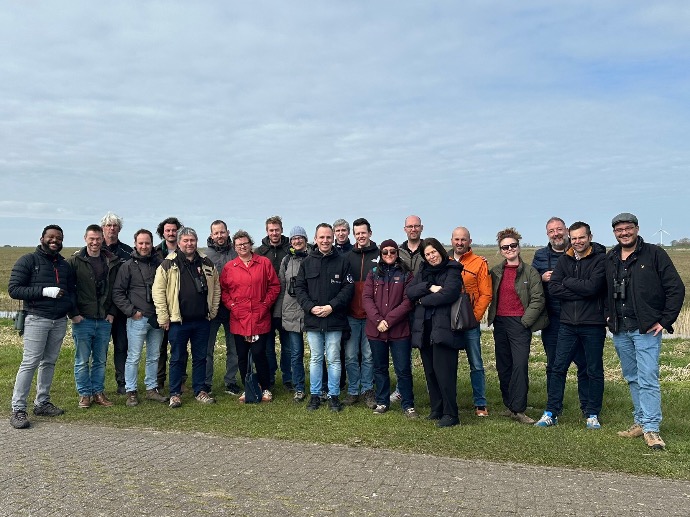
FARMBIRD partners gathered in Fryslân for the project’s first partner meeting and kick-off.
On 31 March and 1 April 2026, the FARMBIRD partnership came together in Workum, the Netherlands, for its first partner meeting. Hosted by the Province of Fryslân, the two-day meeting brought the project partners together in person to turn FARMBIRD’s ambitions into practical cooperation.
The challenge they share is clear. Farmland birds such as the Black-tailed Godwit, Lapwing and Redshank depend on landscapes that are changing rapidly. Protecting these birds requires good habitat and effective management, but also better information about where birds are, how they use the landscape and where they face risks.
That is where FARMBIRD comes in.
Across North-West Europe, the partners are exploring how technologies such as drones, GPS tracking, acoustic monitoring, remote sensing and artificial intelligence can help us see more — and use that knowledge to make better conservation decisions.
Bringing knowledge from across Europe together
The meeting started around the table. Partners shared the monitoring techniques already being used in their regions and discussed where knowledge, tools and experience could be transferred across borders.
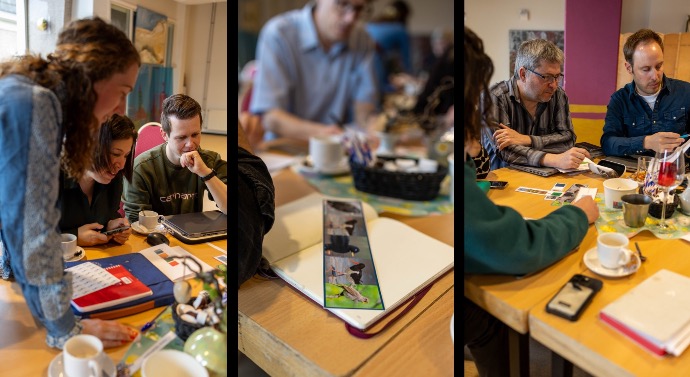
Small-group sessions allowed partners to compare monitoring approaches and learn from experiences in different regions.
These conversations showed just how much knowledge already exists within the partnership. Some organisations bring years of practical field experience, others specialise in ecological research, data, artificial intelligence, remote sensing, farmer engagement or policy.
The strength of FARMBIRD lies in bringing these perspectives together.
It also means asking practical questions. Can a monitoring technique developed in Fryslân work in France or Flanders? Can different regions collect data in a comparable way? And how can new technology support — rather than replace — the knowledge of farmers, volunteers and field experts?
From LiDAR to the language of the godwit
Technology moved from discussion to demonstration during the official opening of the project.
FARMBIRD was officially launched by Matthijs de Vries, Member of the Provincial Executive of Fryslân, who highlighted the importance of monitoring for meadow bird conservation and policy in the region.
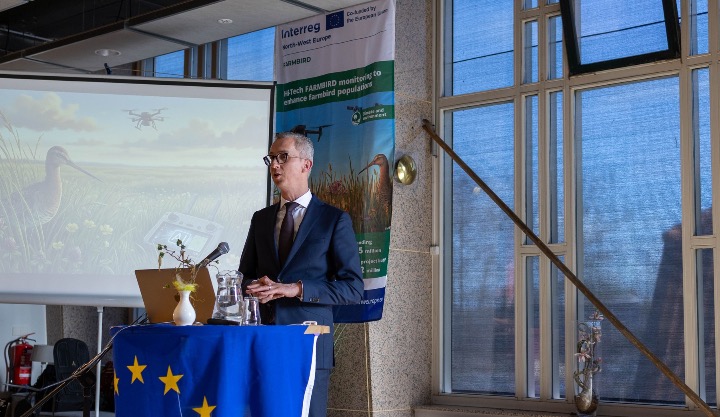
Participants were then introduced to several innovative monitoring approaches, including LiDAR, acoustic monitoring and GPS-based tracking of chicks.
BirdEyes also showed how science can tell a story, with a film about the vocalisations — or “language” — of the Black-tailed Godwit.
The demonstrations made one thing clear: new technologies allow us to observe parts of a bird’s life that are difficult to see with traditional monitoring alone. But collecting more data is not the final goal.
The real question is what we do with it.
From monitoring to action
One of the strongest conclusions from the meeting was that monitoring should never become an end in itself.
Knowing where a chick moves, where a predator appears or how vegetation changes only becomes valuable when that information can support a decision.
That might mean adapting a mowing date when chicks are present, focusing nest protection in a particular area, identifying potential predation hotspots or adjusting habitat management.
For FARMBIRD, the challenge is therefore not simply to develop better technology. It is to create a clear link between observation, information and action.
Creating a shared direction
Technology is only one side of FARMBIRD. Successful farmland bird conservation also depends on cooperation between people.
During the second day, partners looked at citizen science, farmer engagement and the different stakeholders connected to farmland bird conservation.
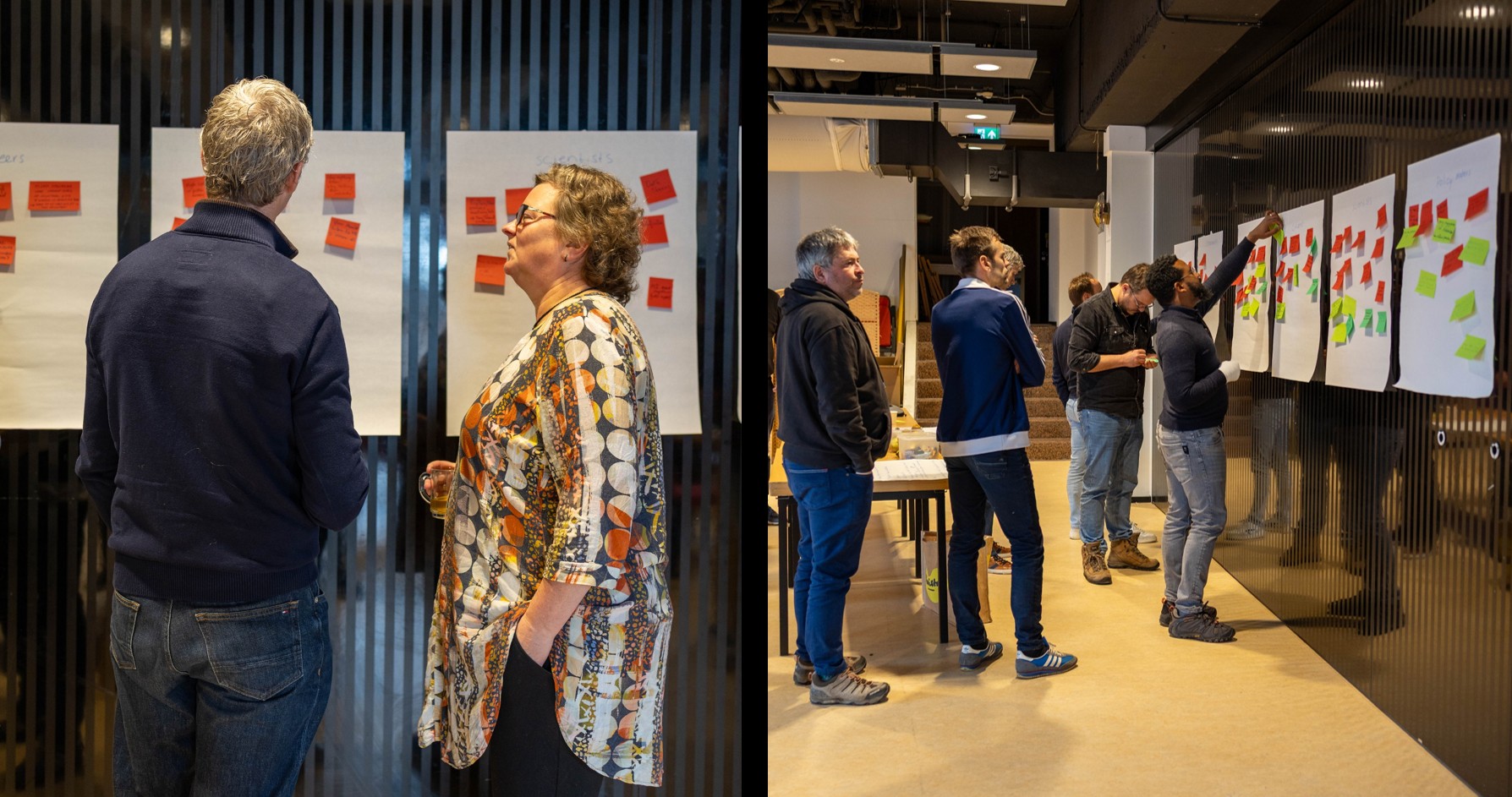
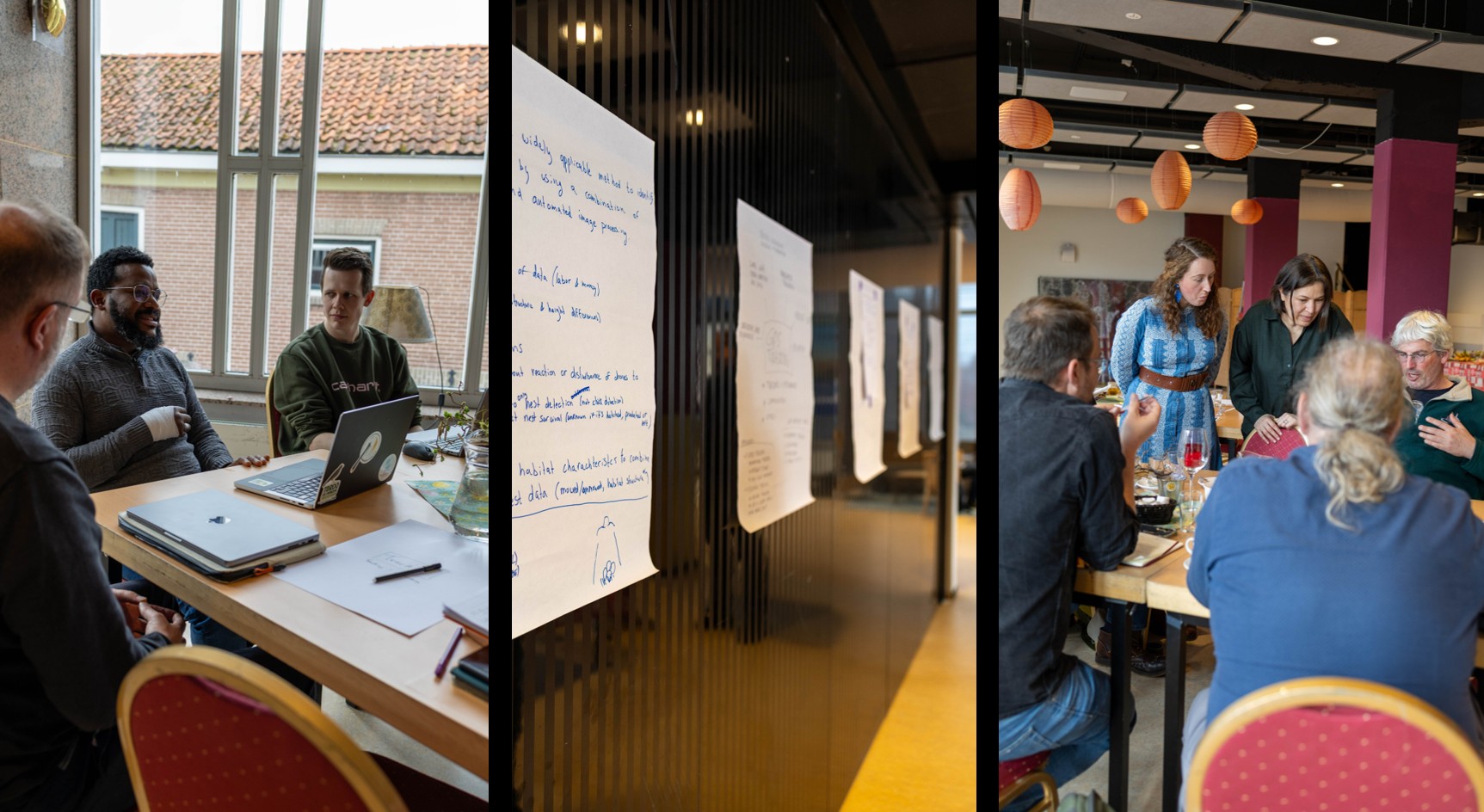
Caption: Partners explored shared interests and different perspectives as part of the FARMBIRD stakeholder and strategic visioning session.
A strategic visioning session brought these different perspectives together. Farmers, conservation organisations, researchers, volunteers, public authorities and technology partners may approach farmland bird conservation from different starting points, but they also share an important goal.
This session helped lay the foundation for FARMBIRD’s communication concept:
We Fly Together.
It reflects what FARMBIRD aims to do throughout North-West Europe: connect people, knowledge and technology around the birds and landscapes we all share.
Into the field at Workumerwaard
The meeting ended where farmland bird conservation ultimately happens: outside.
In the nearby Workumerwaard, Jeroen de Vries from BoerenNatuur Fryslân introduced the partners to one of Fryslân’s important meadow bird areas and explained how farmers, conservationists and researchers work together in the landscape.
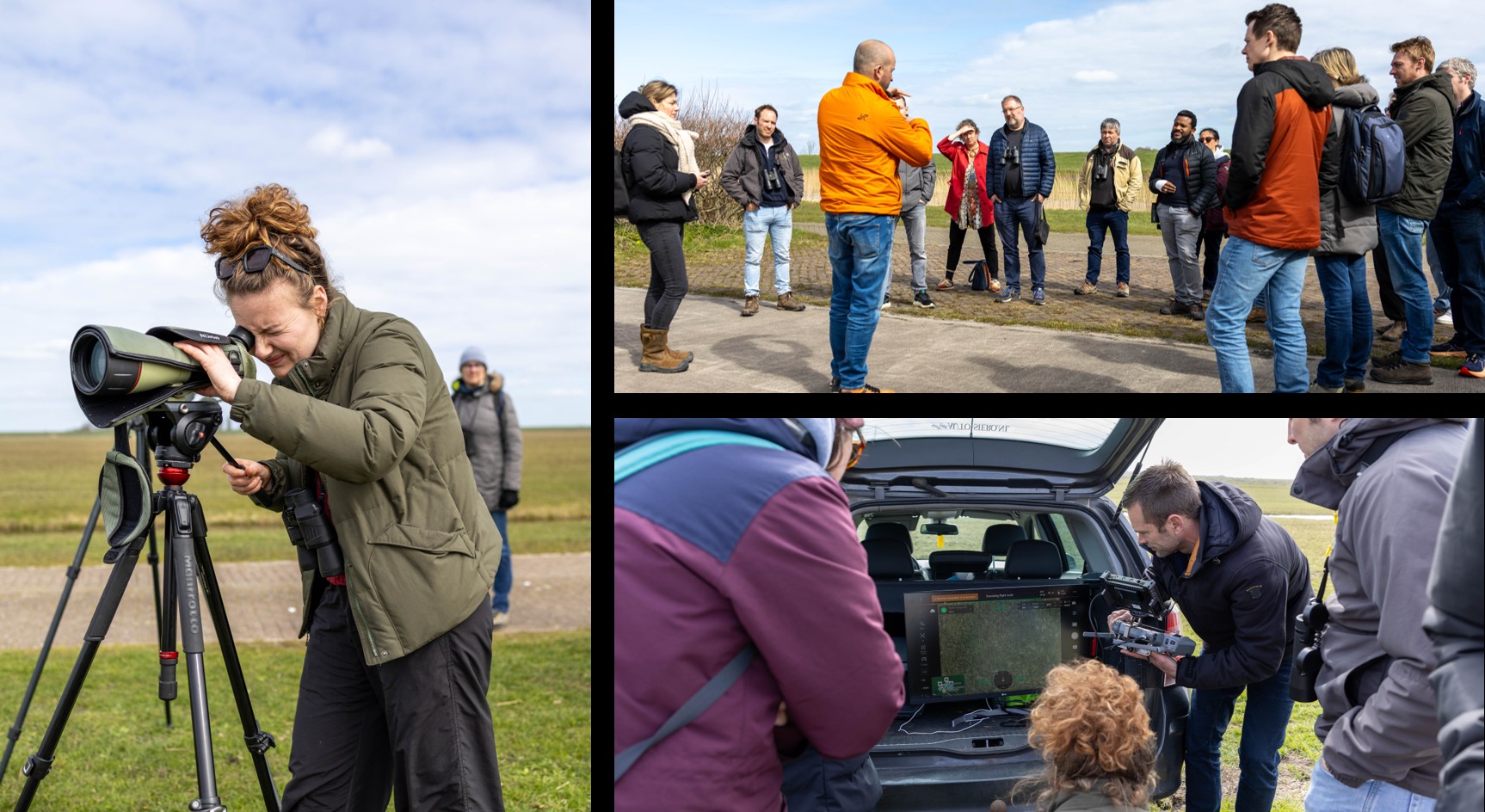
Caption: During the field visit to Workumerwaard, partners saw monitoring technology and meadow bird conservation in practice.
The BFVW demonstrated the use of drones for meadow bird monitoring, while researchers from the University of Groningen shared their experience with acoustic monitoring and chick tracking.
After two days of presentations and discussions, the field visit connected the technology back to the bird, the farmer and the landscape.
And that connection will remain essential throughout FARMBIRD.
Flying together across borders
The first partner meeting showed the diversity of expertise within FARMBIRD, but also the value of working across borders.
No single technology, organisation or region holds the complete answer. The opportunity lies in combining what already works, testing new approaches in different landscapes and learning from each other along the way.
Over the coming years, FARMBIRD will continue to develop and test monitoring approaches across its partner regions. The goal is not simply to collect more data, but to turn better information into practical tools for farmers, volunteers, conservationists, researchers and policymakers.
Because farmland birds do not stop at borders.
And neither should the knowledge we use to protect them.
We Fly Together.