and the past weeks have brought exciting progress across several meadow bird research and innovation projects.
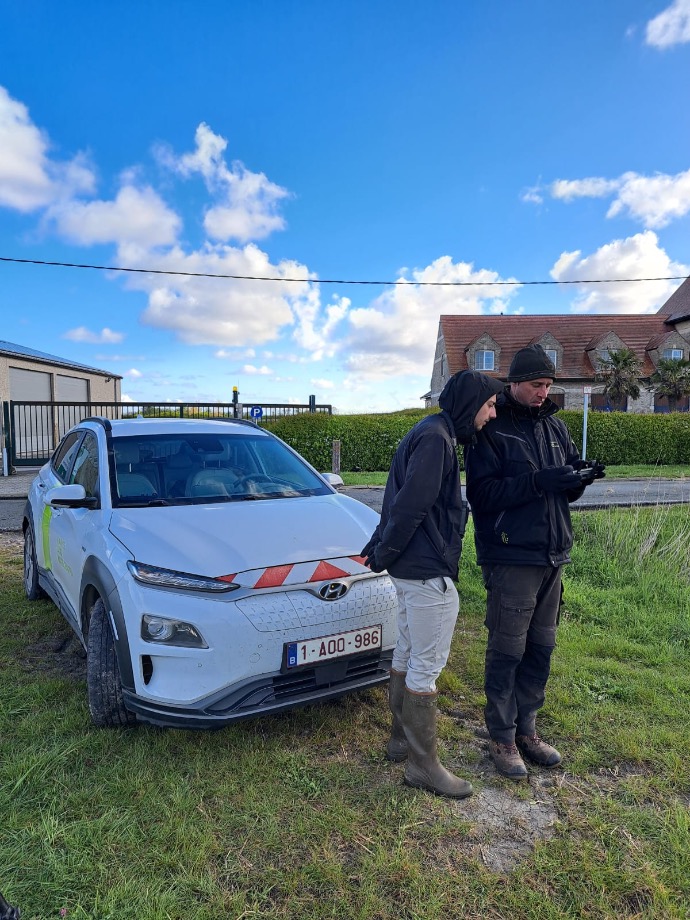
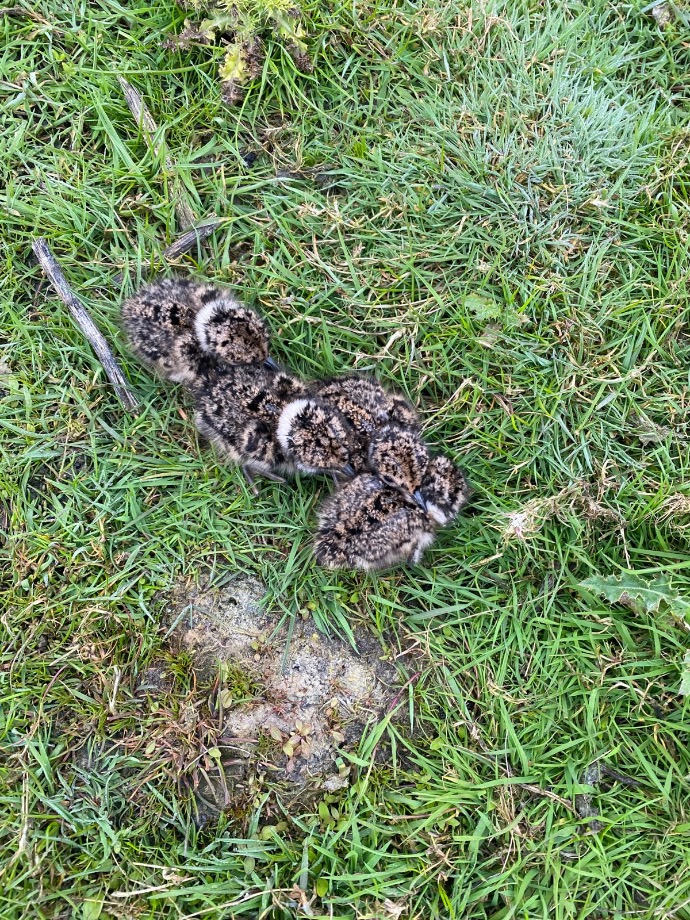
During a recent survey day, Vlaamse Landmaatschappij detected black-tailed godwit nests, lapwing chicks, and several probable lapwing/redshank nests. One particularly remarkable godwit nest contained five eggs, including one white egg — an unusual finding that is now being followed up with INBO (Research Institute for Nature and Forest - Instituut voor Natuur- en Bosonderzoek)
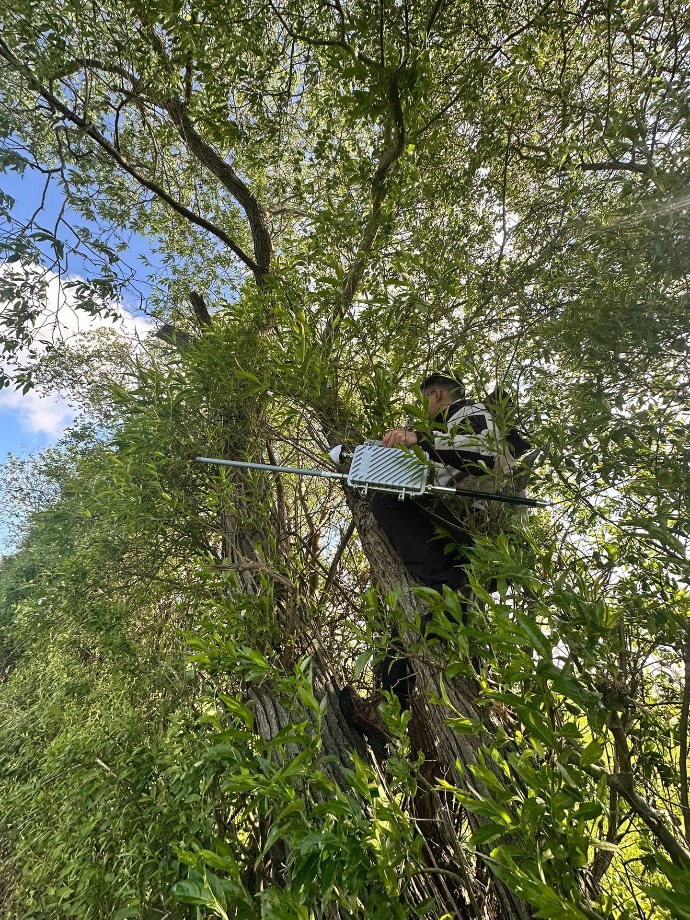
At the same time, major steps are being taken in chick tracking. In the Dümmer Nature Reserve in Germany, BirdEyes, NLWKN, the Campus Fryslân - University of Groningen and Global Messenger have installed and tested the first Internet of Biology antenna network for meadow bird chicks. The initial setup covers approximately 4 km² with 12 small antenna hubs, as part of a wider ambition to monitor chick movements across an unprecedented landscape scale.
The first real-world pilot has now started, with tags deployed on black-tailed godwit chicks. Early tests show promising detection results, with expected location accuracies ranging from around 15–30 metres in well-covered areas to over 150 metres at the edges of the antenna network. These data will help researchers better understand chick movements in relation to habitat conditions, vegetation structure and landscape use.
In parallel, multispectral drone mapping is being tested to capture habitat structure at ultra-fine resolution. The goal is to produce 5 cm resolution maps of the southern Dümmer area, enabling researchers to assess changes in soil moisture, vegetation heterogeneity and the impact of dry and wet years at the same scale as chick movement data.
In the Nestdrone project, drone-based monitoring used by Bond Friese VogelWachten continues to show its value in the field. The season is already delivering impressive numbers: more than 25 users are currently working with the AI drone software for nest detection, and 2,249 nests have already been detected automatically.
Together, these developments show how field expertise, drone technology, AI and next-generation tracking systems can strengthen meadow bird conservation — from finding nests more efficiently to understanding what chicks need to survive.
A big thank you to all partners and field teams involved for pushing this work forward in such a collaborative and innovative way.